
Open for the truck, closed for the goods
Sections run on rails and stack at one end. The trailer reverses into clear space, the load comes off under cover, and the shelter closes again for the night shift.
Industrial · Logistics
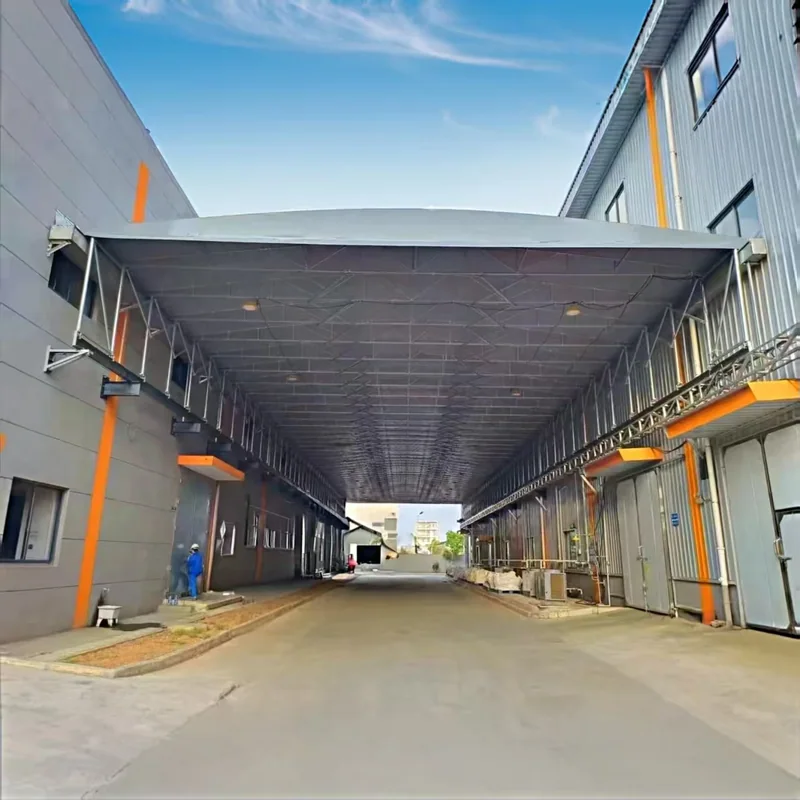
Retractable sliding shelters that run on rails over a loading yard — open for the truck, closed over the goods. Steel frame, PVC or membrane cover, sized to the yard.
01 What the shelter has to solve
A fixed canopy over a loading bay blocks either the trailer or the crane. A retractable shelter opens over the vehicle and closes over the load, so the yard keeps working through rain, sun and overnight parking.
Sections run on rails and stack at one end. The trailer reverses into clear space, the load comes off under cover, and the shelter closes again for the night shift.
Floor rails have to be level, drained and cast before the frame arrives. The drawing states the tolerance, the anchor pattern and the channel detail — this is the part that ruins installations when it is improvised.
A yard shelter has large open sides and a big roof area. The frame is braced for it, and the parked position for high wind is stated on the drawing so the yard team has a rule to follow.
Valleys and gutters are sized for the roof area, with discharge clear of the dock levellers and the truck path. Snow pockets are checked for the destination, not assumed.
02 Configuration
Most yards end up with a fixed section over the dock doors and a retractable section over the apron. The fixed part carries the gutters and the lighting; the moving part gives the crane and the trailer their clearance.
03 Photographs
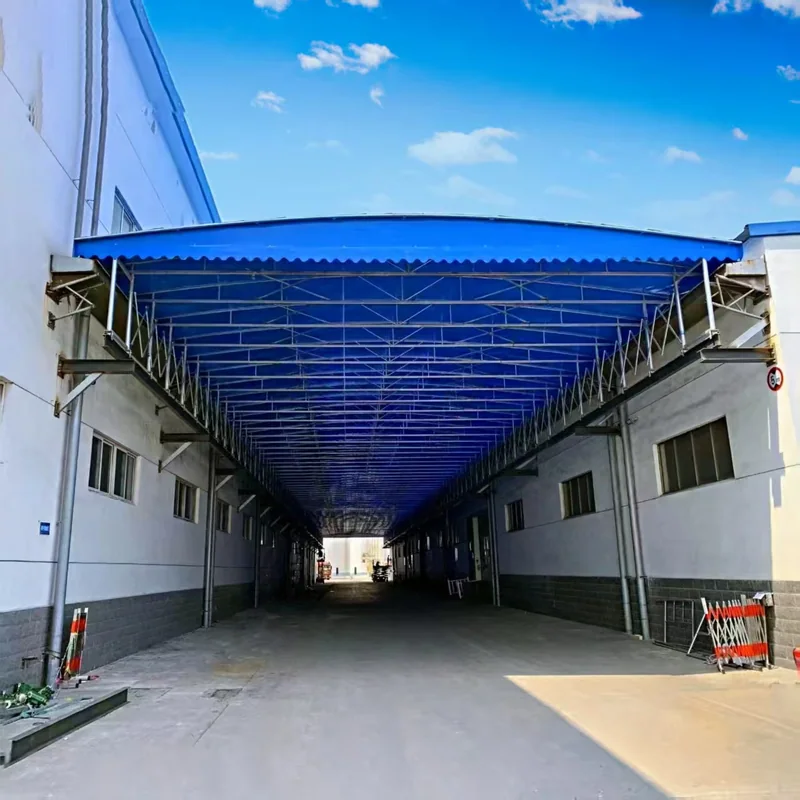
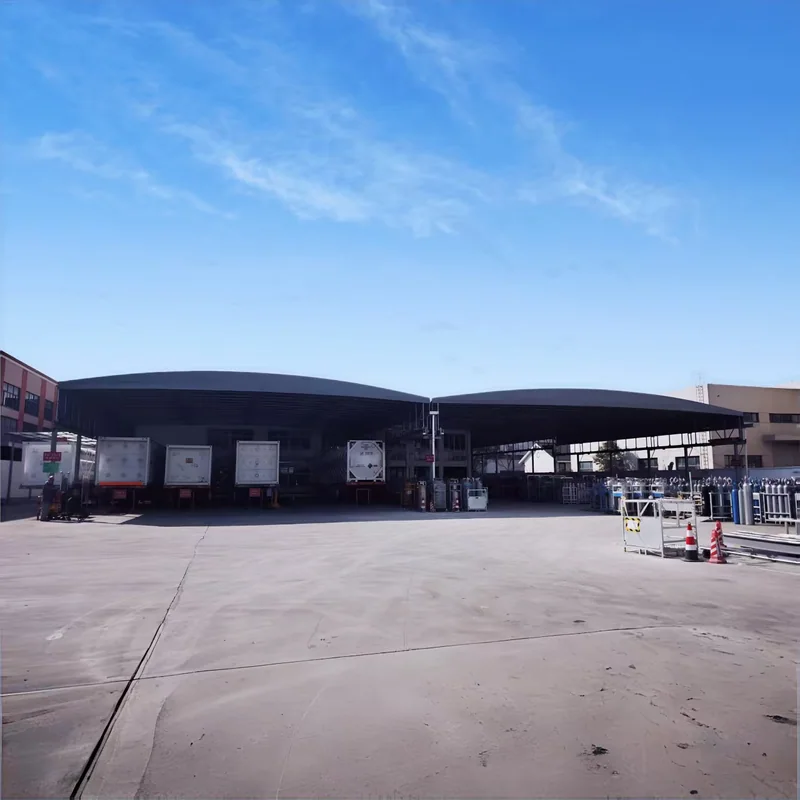
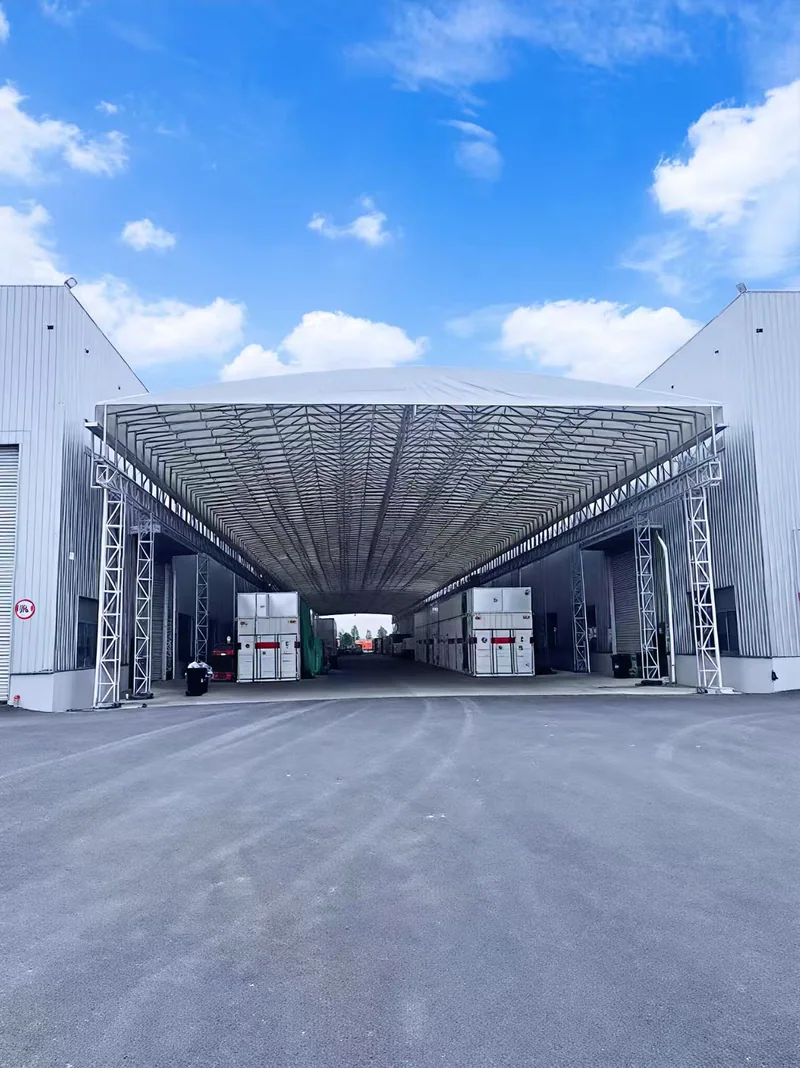
Reference installations across this range. Sizes, colours and membranes vary by project — send a photo of your site and we will say which of these is closest.
04 How it works
Every project follows the same four steps. Nothing is cut until the drawing is approved and the deposit is received.
Dock positions, truck turning path, clear height needed, rail line and photos of the slab.
Rail layout, section stacking, drainage, bracing and the calculation for the destination wind and snow.
Frame, cover, drive and packing priced against the drawing, with the civil work listed separately.
Frame galvanised and trial-assembled, cover cut and marked, everything labelled for erection sequence.
05 Questions
Something not covered here? Send the question on WhatsApp — we answer in English. All questions
Yes. Small sections are usually moved with a manual winch; wide or frequently operated sections are motorised, with a control point at the dock and an interlock so the shelter cannot move while a trailer is under it.
The rails need a level, drained base with the anchor pattern on the drawing. On an existing slab this is often a cast-in channel or a new strip footing along the rail line, done by your contractor before delivery.
That is decided by the clear height and the parked stack height, both on the drawing. Send the crane envelope and the highest load the yard handles and the section is sized around them.
Usually, with a wider span or a central column line. A central column is cheaper but splits the yard; the trade-off is worth discussing before the layout is fixed.
No catalogue numbers, no online checkout. Tell us the site, the span and the destination, and the quotation is built against the layout you approve.
06 Related